In a digital economy, payment enhancements take precedence in seamlessness and efficiency. These payments have created a transformative approach, permitting businesses to embedded payments processing directly within their platforms. The article will discuss integrated payments, definition, how they work, advantages, and their future. What Are Embedded Transactions? Embedded payments meaning refers to processing capabilities in …
In a digital economy, payment enhancements take precedence in seamlessness and efficiency.These payments have created a transformative approach, permitting businesses to embedded payments processing directly within their platforms. The article will discuss integrated payments, definition, how they work, advantages, and their future.
What Are Embedded Transactions?
Embedded payments meaning refers to processing capabilities in a platform, thus allowing its users to make a transaction without being redirected to an external payment gateway created for that particular purpose. Such seamless integration enhances user experience through an almost unnoticeable checkout experience. Integrated payments are mechanisms in which payment opportunities are added to the platform. They allow users to convert to purchasing directly from the platform, thus easing transaction processing by lessening the need for external payment processors.
How Integrated Payments Work
They facilitated through application program interfaces (APIs), allowing secure interfacing between the platform and payment processors. When a user initiates a transaction, the platform communicates the payment transaction details to the payment processor. Here’s a simplified breakdown of how it works:
Payment Authorization: By verifying the payment details, the platform checks for sufficient funds.
Transaction Processing: These would see the movement of funds from the customer’s account toward the merchant’s account.
Settlement: The completion of the transaction would find varying degrees of distribution of funds.
Reporting & Analytics: These processes assure the systematic logging of transaction data in one place so that analysis and reporting are enabled. An end-to-end process runs through the host platform and provides customers with a frictionless experience.
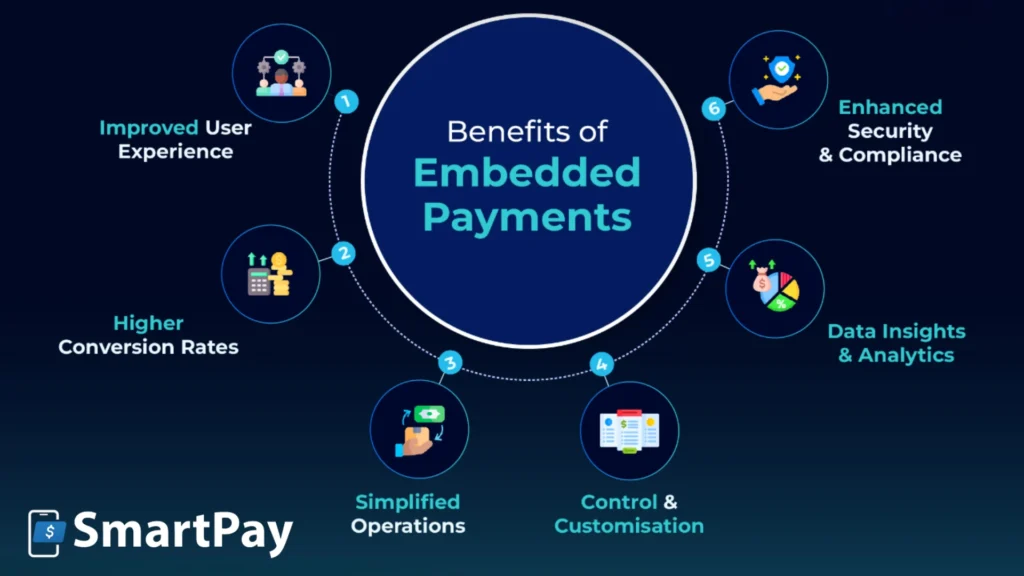
Key Benefits of Embedded Payments
Here are some key benefits of these payments.
Enhanced User Experience: With seamless payments, distractions and delays are reduced by keeping the whole payment flow in one environment. Such convenience then translates into customer satisfaction.
Higher Conversion Rates: Embedded payments streamline the checkout process by allowing customers to complete transactions without leaving the platform. This frictionless experience reduces cart abandonment and helps increase conversion rates.
Improved Data Insights: Embedded payment solutions provide businesses with valuable transaction data and customer behavior insights. These analytics support informed decision-making, personalized customer experiences, and continuous optimization of business operations.
Cost Efficiency: By integrating payment processing directly into their platforms, businesses can reduce reliance on third-party payment providers, streamline operations, lower transaction costs, and improve overall profit margins.
Enhanced Security: Modern embedded payment solutions include advanced security features such as encryption, tokenization, fraud detection, and PCI DSS compliance. These safeguards help protect sensitive customer data, reduce fraud risks, and ensure secure payment processing.
Embedded Payments Functions
The functions that embedded payments systems perform on a digital platform include:
Authorization: validation of payment details, along with the availability of funds.
Processing: execution of funds transfer.
Settlement: finalization of the transaction and fund allocation.
Analytics & Reporting: monitoring and analyzing transaction data for business intelligence.
What Is an Embedded Payment Form?
An embedded payment form is the user interface component of an embedded payment system that allows customers to enter their payment information directly within a website or application. Typically integrated into the checkout page or app interface, these forms enable users to complete transactions without being redirected to an external payment page. They are designed to provide a seamless, secure, and user-friendly experience across both desktop and mobile devices.
Example: Stripe embedded Payments
As a leader in payment processing, Stripe offers full-fledged embedded accounts and payment solutions. With Stripe’s dynamic APIs, businesses can embed their payment forms right in their apps or websites. These tools handle multiple payment methods (from credit cards to wallets to ACH transfers) in a secure, flexible, and scalable manner.
What Is an Electronic Payment Fee?
An electronic payment fee refers to a charge levied by payment processors for handling digital transactions. The rates for these fees may differ depending on the method of payment, the value of the transaction, and the agreement between the business and the processor. Thus, embedded payments systems could reduce these fees by optimizing the transaction flow and minimizing the dependency on other third parties.
Industries That Benefit from Embedded Transaction Systems
These payments are not limited to e-commerce alone. Various sectors are implementing this technology for refining their operational procedures and improving user experiences:
E-commerce: Integrated checkout systems enable easy online shopping.
Ride-Sharing: Uber and Lyft provide in-app payments integrated seamlessly.
Food Delivery: DoorDash and GrubHub seamlessly embed payment for fast transactions.
Travel and Hospitality: Embedded payments for reservation and service within the app for booking sites.
The Future of Embedded Payments
The increased acceptance of these payments is anticipated to be fast with advancements in technology and changes in consumers’ expectations of a more streamlined digital experience. The capabilities of APIs, artificial intelligence, and financial technology are likely to make these payments even more intelligent, secure, and flexible in the future. Business organizations, irrespective of their segments, are now looking forward to integrated payments as a strategic requirement rather than a good-to-have option. One would assume from future predictions that it would go on where payments become invisible, yet so powerful in the user journey.
Conclusion
Embedded transaction payment systems are revolutionizing how businesses can process transactions. They enable a company to integrate payment functionality directly into platforms so that the user experience is more fluid, faster, and safer. Whether you operate e-commerce, a ride-sharing app, or a subscription service, making these payments an element of your future strategy is the right move toward growth and customer experience.
FAQS
Here’s a more professional, polished, and reader-friendly version of your FAQ content:
What are embedded payments?
Embedded payments are payment capabilities integrated directly into a platform or application, allowing customers to complete transactions without being redirected to a third-party website. This creates a faster, more seamless checkout experience.
What are the benefits of embedded payments for businesses?
Embedded payments offer several advantages, including:
Improved customer experience with a frictionless checkout process
Higher conversion rates and reduced cart abandonment
Better access to payment and customer data for business insights
Lower operational costs through streamlined payment workflows
Enhanced security with built-in fraud prevention and encryption
Can any business accept in-app embedded payments?
Yes. Businesses of all sizes and across various industries can integrate embedded payment solutions into their websites, mobile apps, or digital platforms. Payment providers such as Stripe and other payment service providers offer APIs and tools that make implementation straightforward.
Are embedded payments secure?
Yes. Embedded payment solutions are designed with robust security features, including encryption, tokenization, fraud detection, and compliance with industry standards such as PCI DSS. These measures help protect sensitive payment information and reduce fraud risks.
What is the future of embedded payments?
The future of embedded payments is highly promising. As digital commerce continues to grow, businesses are increasingly adopting embedded payment solutions to deliver seamless customer experiences. Emerging technologies such as AI-driven fraud detection, real-time payments, digital wallets, and blockchain innovations are expected to further enhance the speed, security, and convenience of embedded payments.